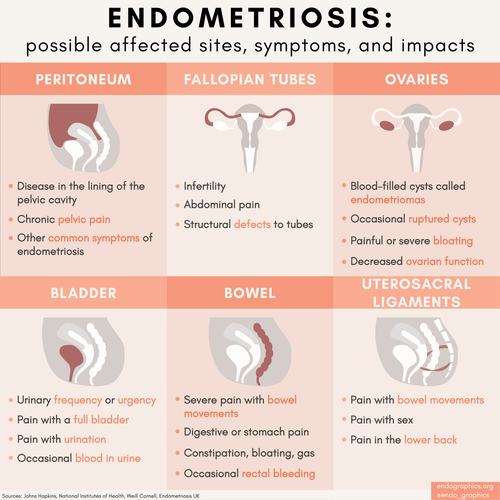
These are cysts filled with old blood. Endometriomas are a type of Endometriosis, but alternatively, Endometriosis does not mean that you have an Endometrioma.
Mild or no pelvic pain; Possible infertility; Occasional dysmenorrhea
None
Stage II (Mild)
Mild to moderate
Moderate pelvic pain; Dysmenorrhea; Dyspareunia; Possible infertility
None
Stage III (Moderate)
Moderate
Chronic pelvic pain; Severe dysmenorrhea; Dyspareunia; Dyschezia; Infertility
Local spread
Stage IV (Severe)
Severe
Chronic, severe pelvic pain; Debilitating dysmenorrhea; Severe dyspareunia; Dyschezia; Dysuria; Infertility; Bowel/bladder dysfunction
Extensive local spread
Stage IV+ (Very Severe)
Very severe
All Stage IV symptoms, plus: Deep Infiltrating Endometriosis (DIE): Intense chronic pelvic pain; Severe dyspareunia; Dyschezia, bowel obstruction possible; Dysuria, hydronephrosis possible; Organ dysfunction depending on affected areas (e.g., bowel, bladder). Thoracic Endometriosis: Catamenial pneumothorax (lung collapse during menstruation); Hemoptysis (coughing up blood); Cyclic chest pain, shoulder pain, or dyspnea (shortness of breath); Hemothorax or pericardial effusion in severe cases
Extensive spread to deep tissues or distant sites such as the chest cavity
*Staging is not utilized universally, nor does staging denote the severity of pain and/or symptoms
Localized uterine pain or tenderness; Heavy menstrual bleeding (menorrhagia); Dysmenorrhea (painful periods); Dyspareunia (painful intercourse); Pelvic pressure or fullness; Possible infertility
Localized uterine involvement
Diffuse Adenomyosis
Moderate to severe
Diffuse uterine pain or tenderness; Severe menorrhagia (heavy menstrual bleeding); Chronic pelvic pain; Dyspareunia; Significant uterine enlargement (“boggy” uterus); Anemia due to heavy bleeding; Infertility or miscarriage risk
Extensive uterine involvement
Stage 1: Early
Mild
Minimal infiltration of endometrial tissue into the uterine wall; Symptoms often mild or non-existent
None
Stage 2: Moderate
Moderate
Increased infiltration of uterine wall tissue; Heavy and painful periods; Bloating and discomfort during intercourse
None
Stage 3: Severe
Severe
Severe infiltration leading to distortion of uterine shape; Escalating menstrual pain and flow intensity
Possible localized spread
Stage 4: Advanced
Very severe
Extensive tissue infiltration causing significant uterine damage; Chronic pelvic pain, heavy bleeding, intermenstrual bleeding, and painful intercourse
Potential damage to surrounding structures
Treatments
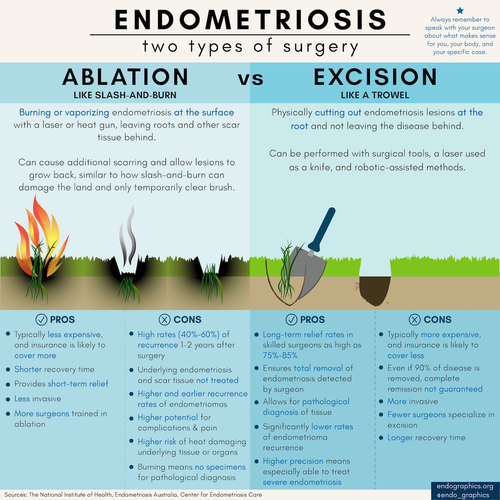
Surgical
Endometriosis Treatments
It is critical to note: Hysterecomy DOES NOT treat Endometriosis, only Adenomyosis
Technique
Key Advantage
Provider Network
Laparoscopic Excision Surgery
Gold standard for endometriosis treatment; removes lesions while preserving healthy tissue
Various specialized centers worldwide
Nerve-Sparing Excision
Preserves pelvic nerve plexus to reduce post-op chronic pain
Mayo Clinic; UCSF; EEL Centers
Presacral Neurectomy
Cuts nerves to uterus to relieve severe pelvic pain
Various specialized centers
Lysis of Adhesions
Removes scar tissue that can cause pain and infertility
Various specialized centers
Resection of Deep Infiltrating Endometriosis (DIE)
Targets removal of deeply infiltrating lesions affecting bowel, bladder, ureters
Various specialized centers
Robotic-Assisted DIE Resection
Enhanced precision for rectovaginal and bladder lesions
Memorial Sloan Kettering; Johns Hopkins
Robotic-Assisted Surgery
Enhanced precision and control for complex cases
Various specialized centers
Adenomyosis Treatments
Technique
Key Advantage
Provider Network
Hysterectomy
Surgical removal of uterus for severe cases not responding to other treatments
Gut–microbiota–brain axis recently emerged as a key player in neuro-pain pathways
Personalized treatment
Needs More Developed Research
Medicinal
Medicinal Treatments
As stated from EndoWhat?, “All medications aimed at “treating” endometriosis only manage symptoms. They do not treat the disease itself. Drug therapy can suppress endometriosis, not eradicate it.”
Pelvic health physiotherapy is an effective, evidence‑based treatment for some symptoms of endometriosis, like pain with sexual activity. It’s also helpful for treating other conditions and diseases that many people with endometriosis have, either independently or as a result of endometriosis.
Groundbreaking study analyzing >43,500 endometriosis patients across six UC medical centers, identifying over 600 disease correlations and confirming endometriosis as a multi-system disorder. Key findings include strongest associations with uterine adenomyosis (OR = 181), pelvic adhesions (OR = 51.1), and protective effects of hyperlipidemia (OR = 0.67). Study reveals distinct patient subgroups requiring personalized treatment approaches.
“Those with endometriosis had 4.2-fold higher ovarian cancer risk than those without endometriosis. Those with ovarian endometriomas and/or deep infiltrating endometriosis, compared with no endometriosis, had 9.7-fold higher risk”
“Recent studies have identified several potential biomarkers, including microRNAs and cytokines, that could improve the accuracy of endometriosis diagnosis.”
“This article explores the link between endometriosis, gut health, and inflammation, suggesting that gut microbiota may play a role in the pathogenesis of endometriosis and its associated symptoms.”
“This study provides an overview of the pathophysiology of endometriosis and discusses current management strategies, emphasizing the importance of personalized treatment approaches.”
“Oral gonadotropin-releasing hormone (GnRH) antagonists appear to offer a promising new potential treatment alternative, allowing dose-dependent control of estradiol levels with rapid reversibility and no flare-up effect.”
“New therapeutic approaches, including the use of GnRH antagonists and uterine artery embolization, are showing promise in the management of adenomyosis symptoms.”
“A prospective observational study compared the presence of comorbidities between patients with adenomyosis (n=342) and those with both adenomyosis and endometriosis (n=347).”
Know the Symptoms
1 in 7 women have endometriosis. Learn the signs and find expert help.
Connect with Others
You're not alone. Join 570 million women worldwide in the endo community.
Spread Awareness
Share the truth: 1 in 7 women have endometriosis, not 1 in 10. Help others learn.
1 in 7 women have endometriosis
⏱Average diagnosis takes 7-10 years - know what to look for NOW
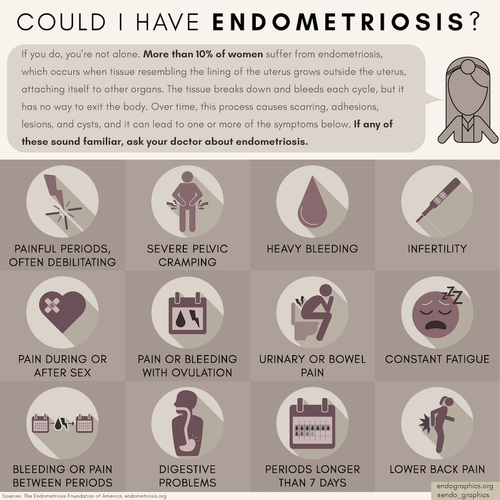
Severe Period Pain
Pain that goes beyond typical cramps. This pain can be debilitating, interfere with daily activities, and not respond well to over-the-counter pain medication.
Pain During/After Sex
Deep pain during or after sexual intercourse, which can affect relationships and quality of life.
Painful Bowel Movements or Urination
Pain during bowel movements or urination, especially during menstruation. May include cyclic bowel symptoms or blood in stool/urine.
Heavy or Irregular Bleeding
Heavy menstrual bleeding (menorrhagia), bleeding between periods, or passing large blood clots.
Fatigue and Exhaustion
Persistent tiredness and low energy that isn't relieved by rest, often related to chronic pain and inflammation.
Difficulty Getting Pregnant
Infertility or difficulty conceiving. Endometriosis is found in 25-50% of women experiencing infertility.
Chronic Pelvic Pain
Persistent pain in the pelvic region that may occur throughout the month, not just during menstruation.
Bloating / "Endo Belly"
Persistent abdominal swelling and distension, often worsening around menstruation, that can make the stomach appear significantly larger for hours or days.
"New research shows 1 in 7 women have endometriosis, not 1 in 10. It's time to update the conversation. If you're experiencing severe period pain, painful sex, or other symptoms, you're not alone. #EndoWarrior #1in7 #EndometriosisAwareness"